

Mechanical Comparison#
This page compares the main mechanical differences between FlexiBowl® 2.0 and FlexiBowl® 3.0, in terms of dimensions and weight.
Important
Before reading the contents of this page, it is good practice to be familiar with the information given on the Mechanical Specifications page
1. Dimensions and weight#
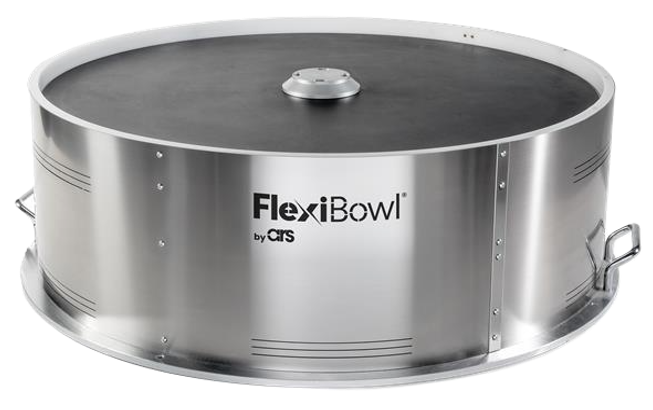
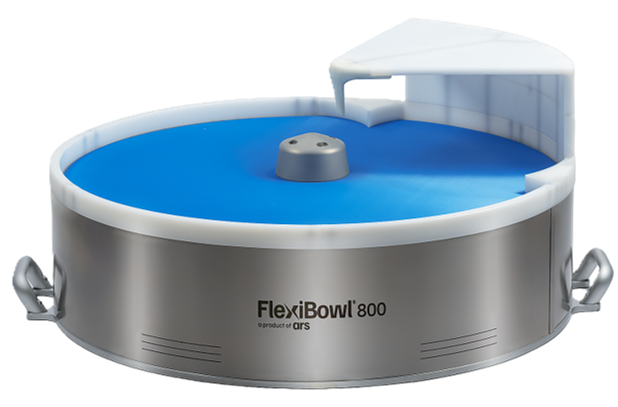
FlexiBowl® 3.0 adopts a more compact and slimmer design than the previous generation: for the same model it is generally lighter and lower, with a width reduction of about 5%.
Weight |
Height (h) |
|||
|---|---|---|---|---|
FB 2.0 |
FB 3.0 |
FB 2.0 |
FB 3.0 |
|
FlexiBowl® 200 |
6 kg |
7 kg |
186 mm |
186 mm |
FlexiBowl® 350 |
25 kg |
14 kg |
299.5 mm |
203 mm |
FlexiBowl® 500 |
42 kg |
35 kg |
296 mm |
217 mm |
FlexiBowl® 500E |
42 kg |
35 kg |
296 mm |
217 mm |
FlexiBowl® 650 |
54 kg |
51 kg |
296 mm |
217 mm |
FlexiBowl® 800 |
71 kg |
67 kg |
296 mm |
217 mm |
FlexiBowl® 1200 |
170 kg |
144 kg |
328 mm |
248 mm |
2. Mounting interface#
Warning
The mounting hole spacing of the FlexiBowl® 3.0 is different from that of the FlexiBowl® 2.0, for all sizes. When replacing a FlexiBowl® 2.0 with a FlexiBowl® 3.0, the existing drilling of the support surface cannot be reused: a new set of holes must be made according to the mechanical interface drawing.
3. Summary#
FlexiBowl® 3.0 offers a more compact mechanical design than the previous generation, generally being lighter, lower and about 5% narrower for the same model.
For the exact dimensional values of each model, refer to the respective Mechanical Specifications pages of FlexiBowl® 2.0 and 3.0.