

Pneumatic Comparison#
This page compares the main pneumatic differences between FlexiBowl® 2.0 and FlexiBowl® 3.0.
Important
Before reading the contents of this page, it is good practice to be familiar with the information given on the Pneumatic Specifications page
1. Compressed air characteristics#
FlexiBowl® 2.0 |
FlexiBowl® 3.0 |
|
|---|---|---|
Required air pressure |
6 Bar |
7 Bar |
Air characteristics |
Filtered and dried |
Clean compressed air according to ISO 8573-1:2010, class 1.3.2 |
2. Pressure adjustment and reading#
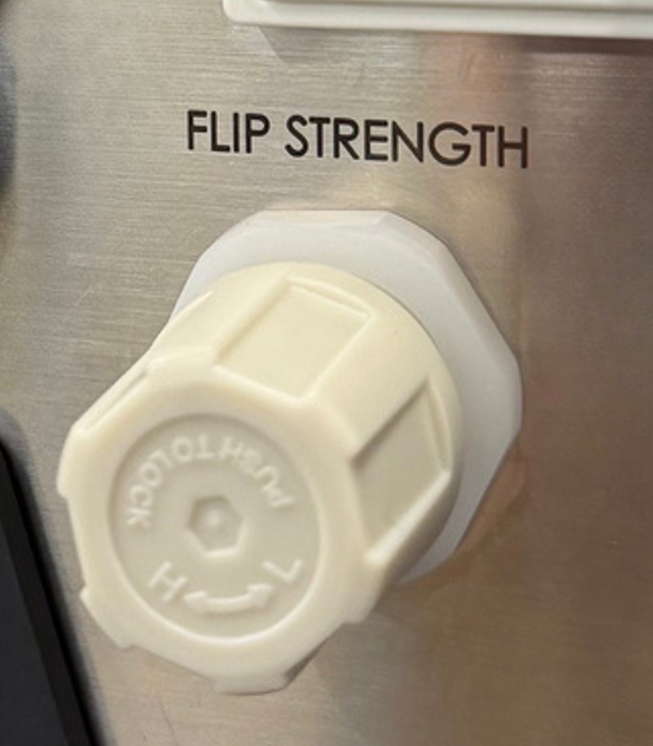
The impulse force is adjusted via the compressed air regulator located on the control panel. The corresponding pressure gauge is integrated into the panel.
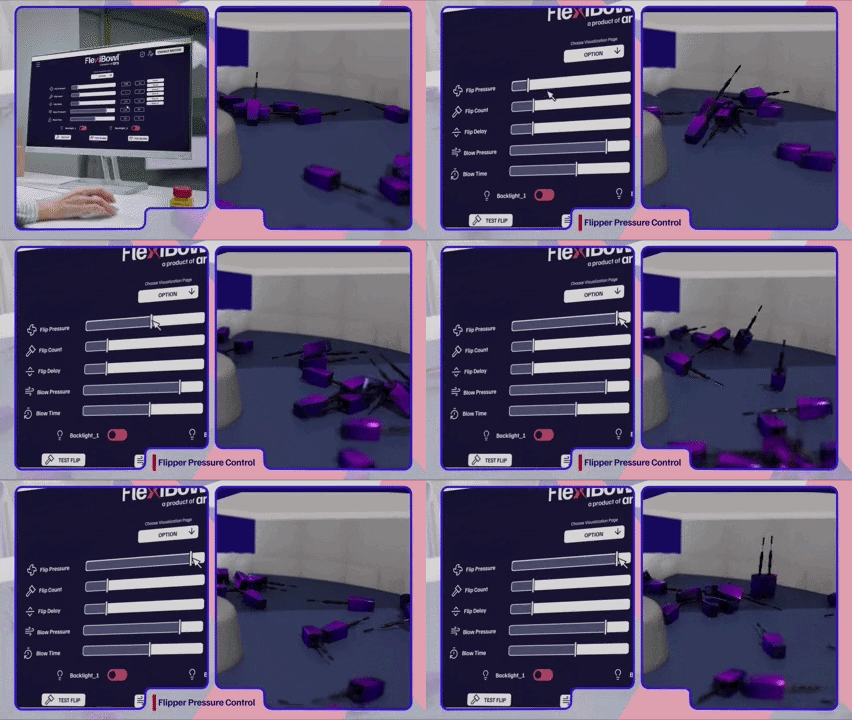
Pressure adjustment and reading can be set directly from the software interface.
3. Blow control#
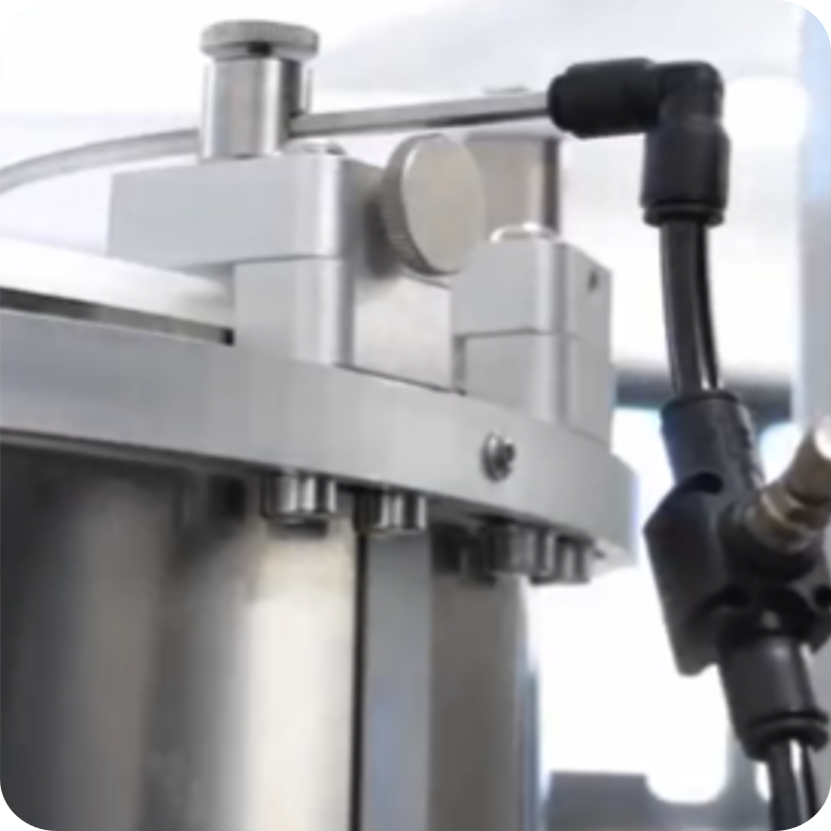
Adjustment via physical pneumatic components (fittings and regulators on the unit).
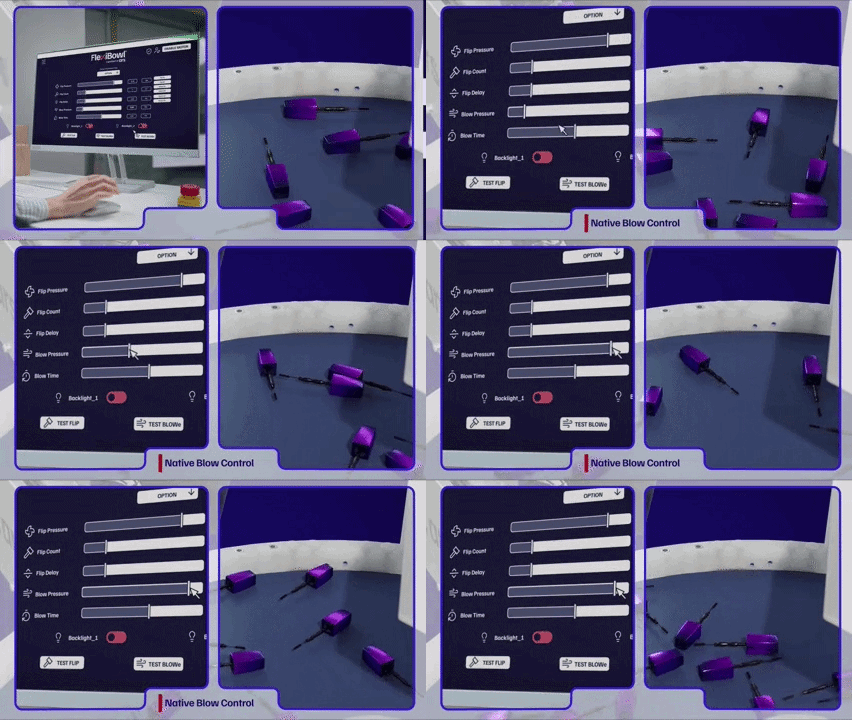
Native blow control (Native Blow Control) directly from the software interface: Flip Pressure, Flip Count, Flip Delay, Blow Pressure, Blow Time.
Note
For details on connecting the air supply, refer to the Pneumatic Interface page.
4. Summary#
FlexiBowl® 3.0 requires a slightly higher air pressure (7 Bar versus 6 Bar) and specifies an ISO 8573-1:2010 1.3.2 cleanliness class, which was not defined for the previous generation. The most significant difference from a usability standpoint is the shift of pressure, flip and blow adjustment and reading from the physical components of the panel to the software interface.